Ilkley Spa Walk
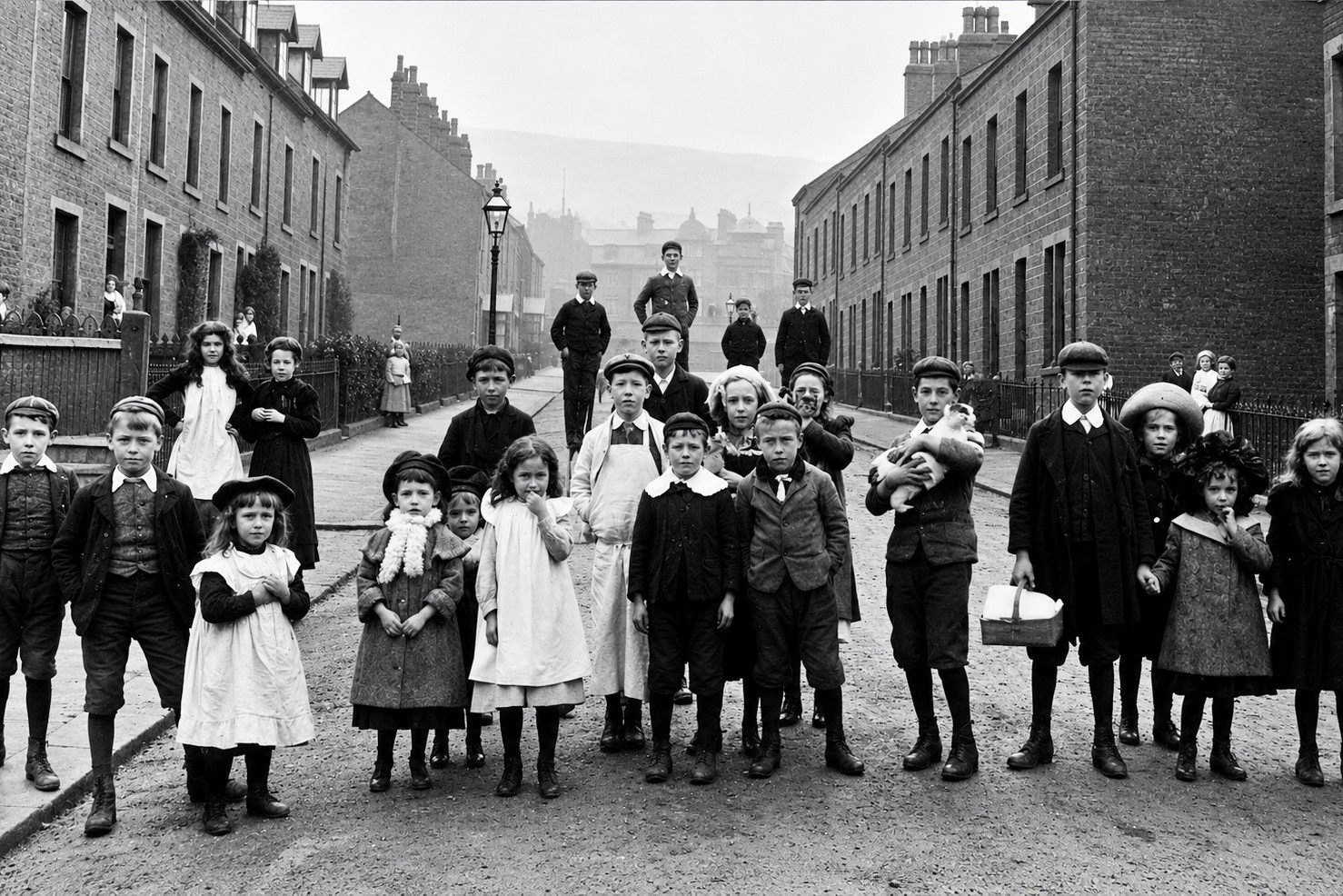
By the second half of the 19th century Ilkley had become famous as an inland spa for its pure cold water, fresh air and beautiful landscape. Before then the little village of Ilkley was huddled around the Anglo-Saxon All Saints Church with its 15th century tower (mentioned in the Norman Domesday Book).
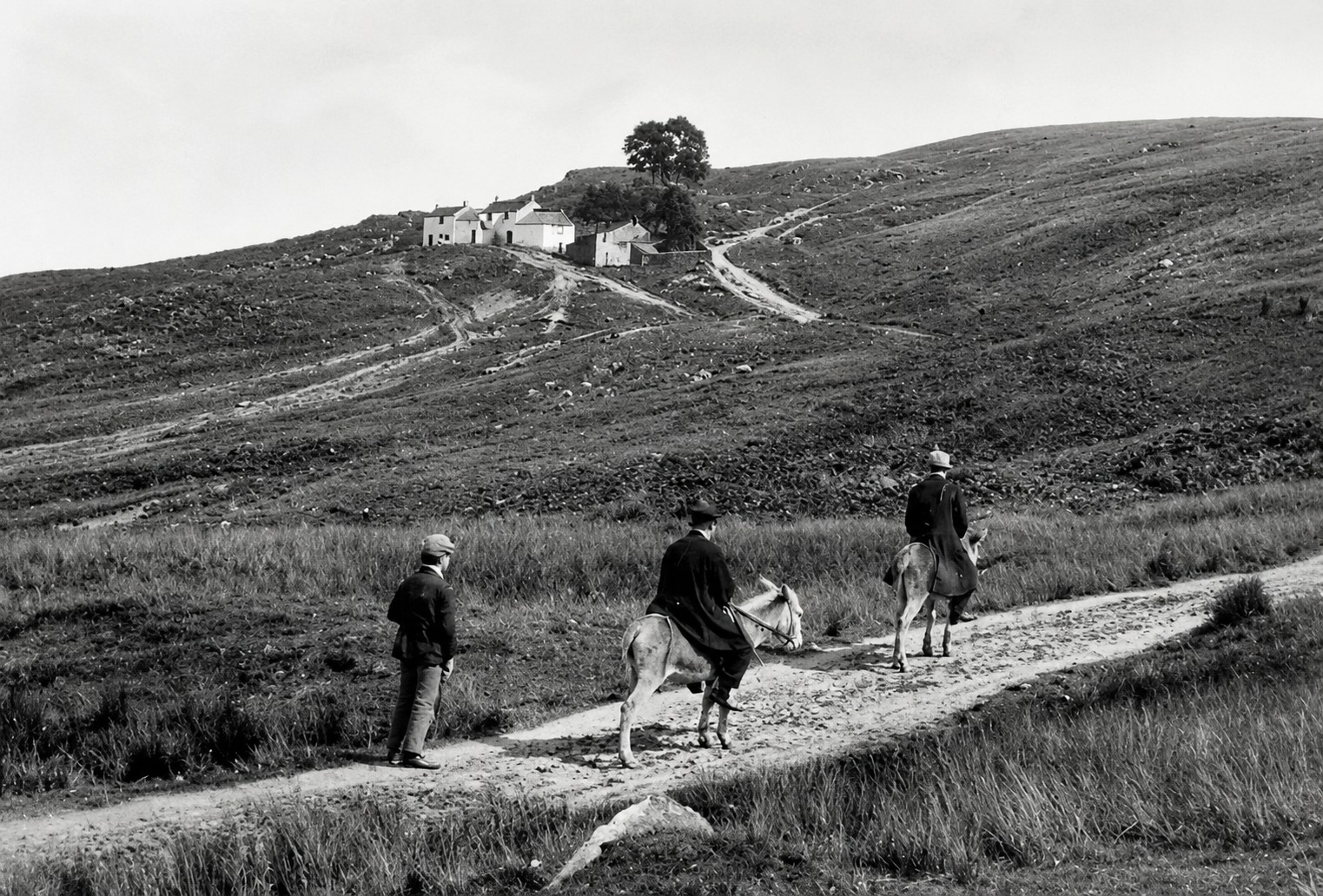
White Wells had offered renovated baths since the 1790s with a charity bath-house from 1829. By the end of the 1850s these bath-houses each had a roof and donkeys were available to ride up to White Wells via Wells Road.
The first new purpose-built Hydro - the Ben Rhydding Hydro - was a mile beyond Ilkley at Wheatley, with its cold water treatments, healthy food, exercise regime and consultations with Dr. William McLeod. As Ilkley became a place to visit and live, a stream down from the moor was culverted in 1854 to create Brook Street. Wells House Hydro opened in 1856 and many Hydros of differing sizes followed.
(note – an * indicates that there is a blue plaque on the building)
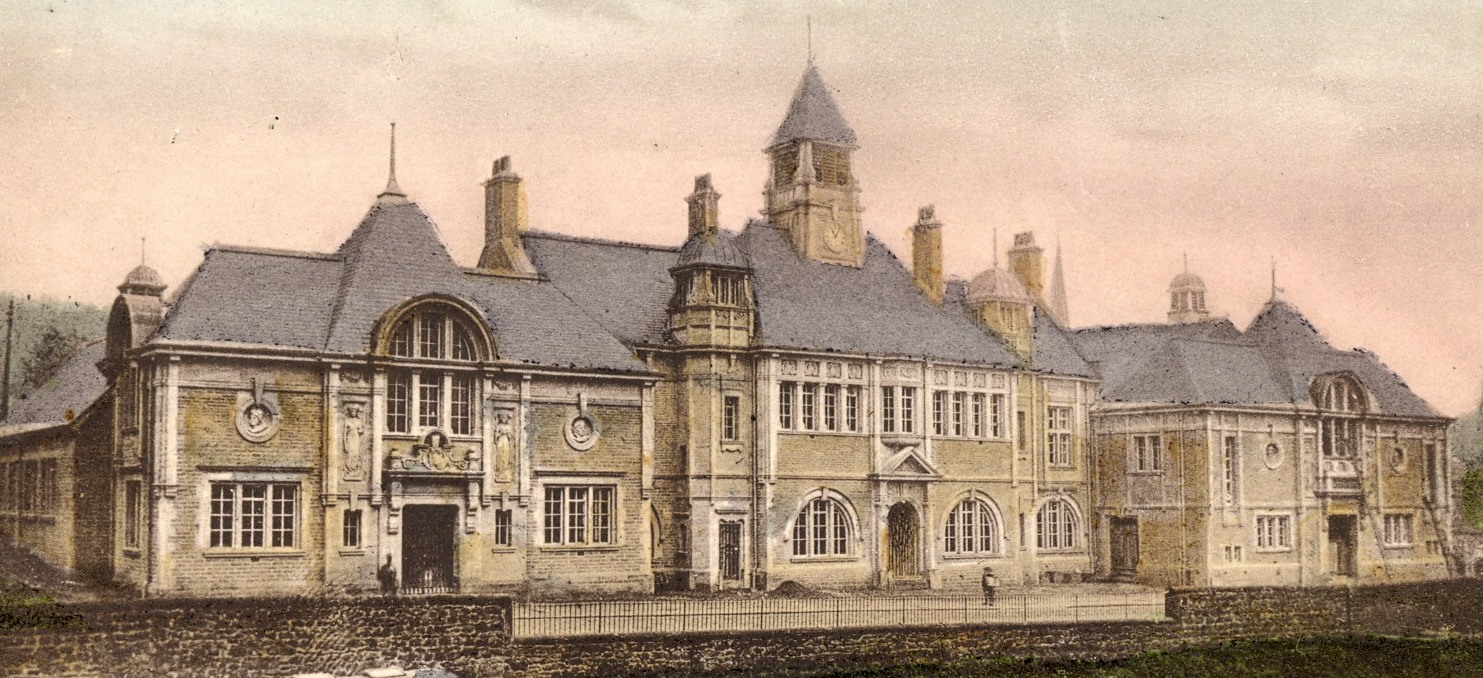
1. Start at Ilkley Town Hall*. Opened in 1908, across from the railway station which had been built in 1870.
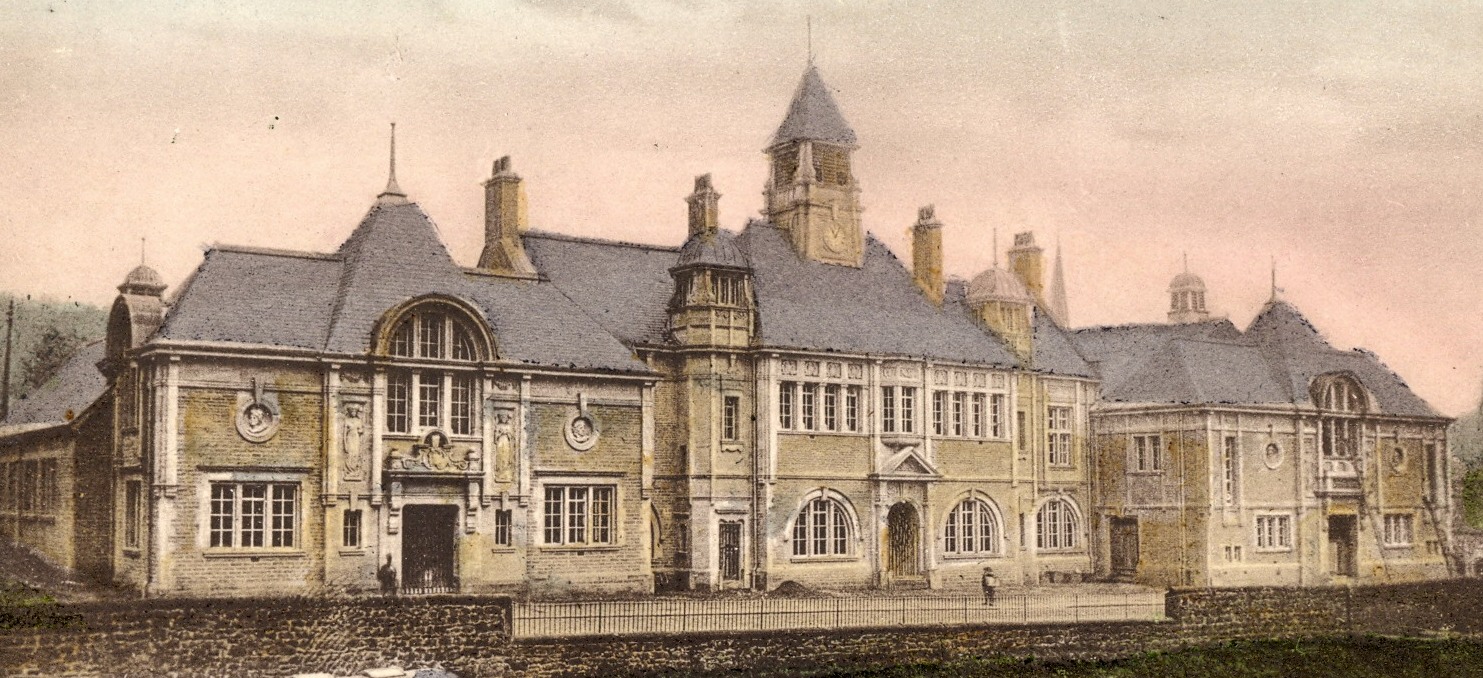 Drawing of the town hall
2. Turn left, cross Wells Road and then walk up Wells Promenade. This once-gated road was built at the end of the 1860s. The buildings were houses on the Wells Promenade side and shops on the Wells Road side. Further up is Guardian Court, the site of the 1870 Wesleyan Church, whose top boundary wall remains.
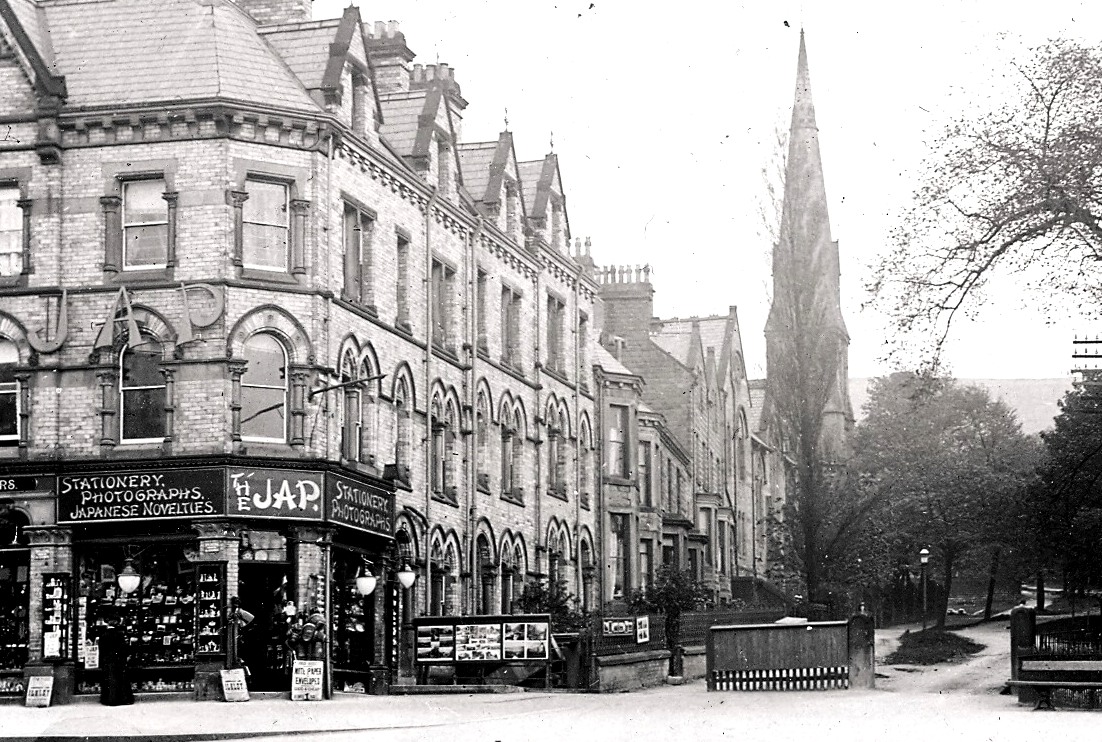 Wells Promenade with gates
3. Turn left in front of Chapel House*, built in 1903 as the Wesleyan Assembly Hall, now apartments.
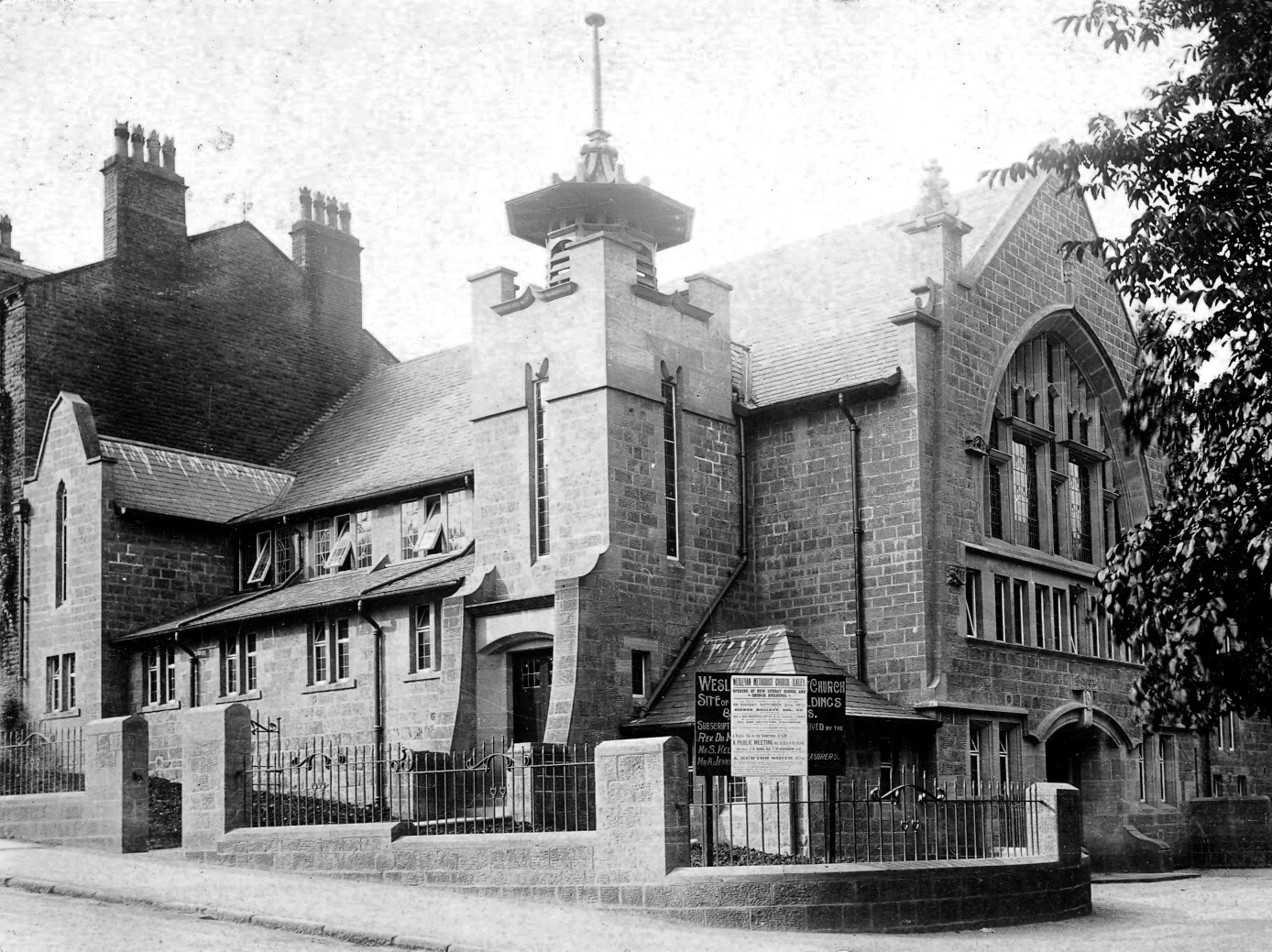 Assembly Hall
4. Turn right, cross over to walk up Wells Road, On the right Wells Court, site of 1870 Royal Hotel and then West View, gentlemen’s residences and lodging houses from the 1840s. Next is West View House (The Heath) 1860, an 1868 semi and The Rombalds*. At the top Moor Cottage was an old farmhouse.
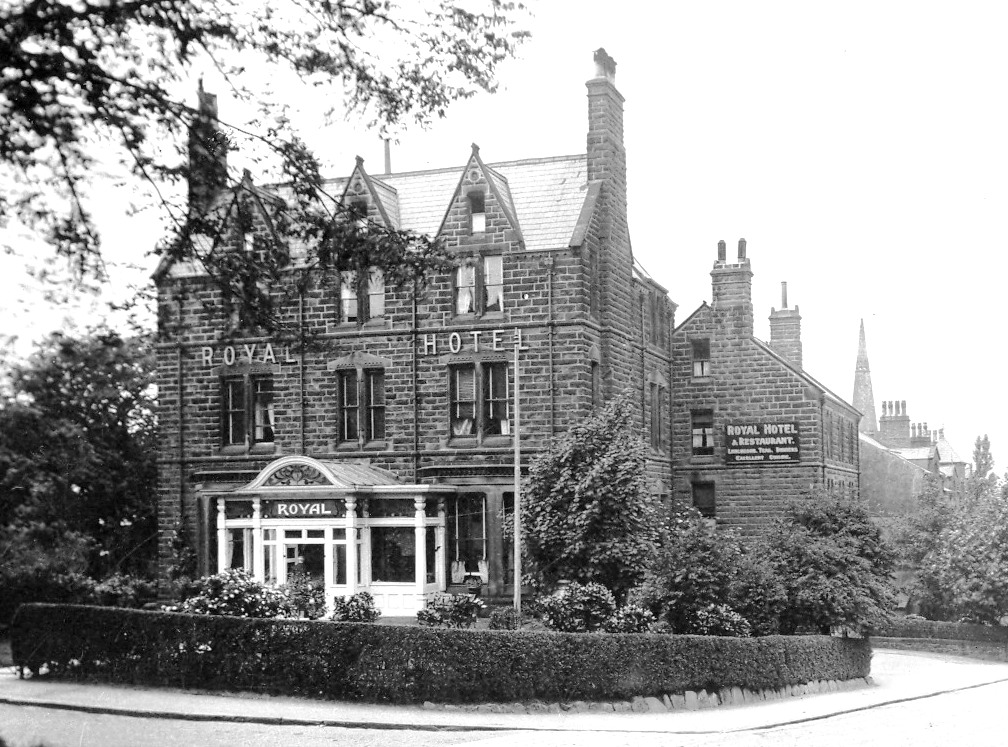 Royal Hotel, now replaced by apartments
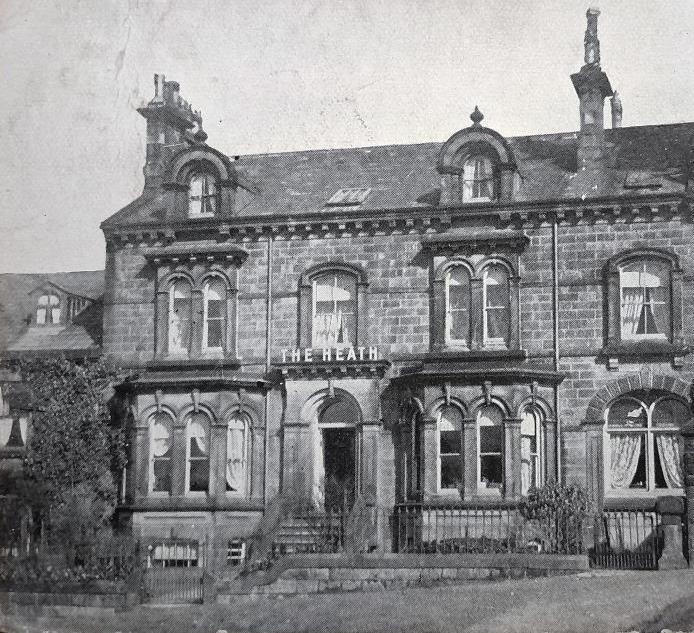 West View House
5. Turn left to walk along Crossbeck Road. South View, was once a lodging house. Opposite is Wells Terrace (renamed Hillside*). Then on the right a series of 1860s houses including Crossbeck House and Terrace. Below on the left are the grounds of Ilkley Hall built in the late 1820s for Joshua Dixon, a Wakefield lawyer. Further along on the right is the Troutbeck Hydro opened 1862 (note the jumping fish on the gable). Then comes Craiglands Park, site of 1860s houses which were converted in the 1890s to the Moorlands Hydro.
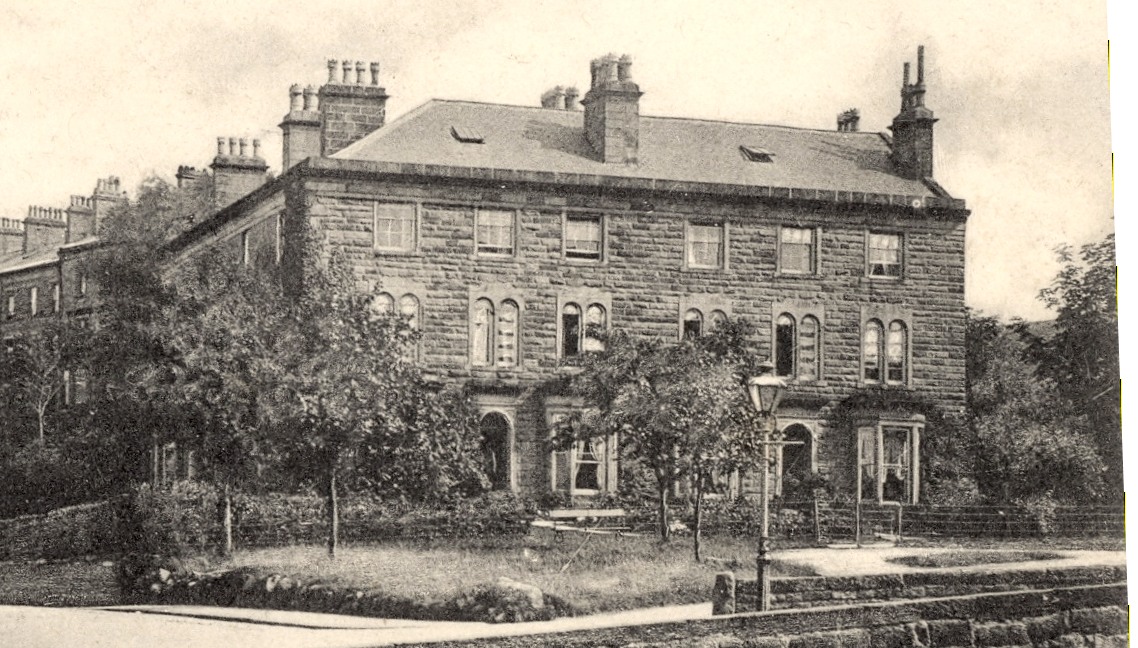 Wells Terrace, renamed Hillside
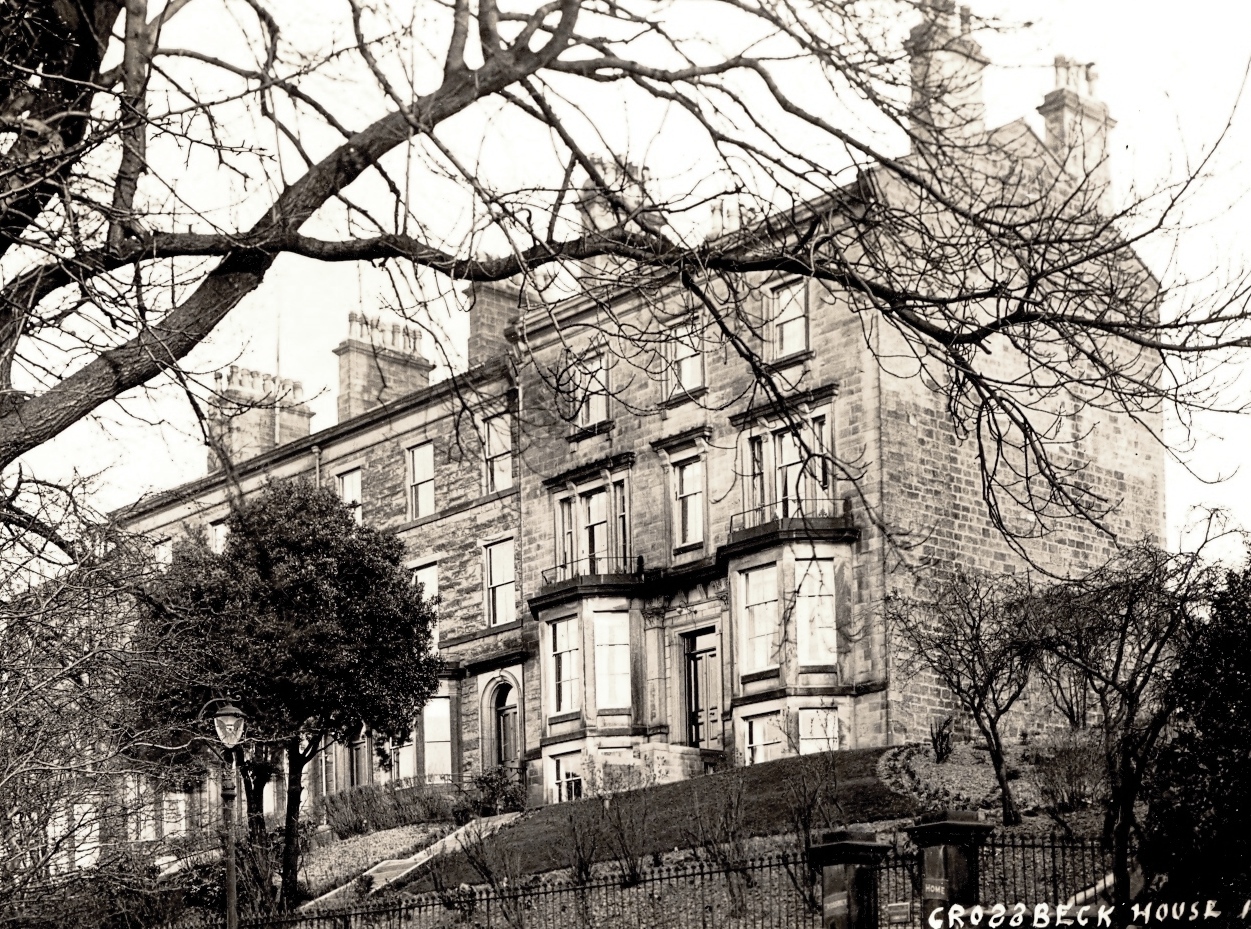 Crossbeck
6. Turn right up the drive to Craiglands, and walk along path to reach Cowpasture Road. Craiglands* is the only surviving hydro hotel. It now has a new 21st century spa.
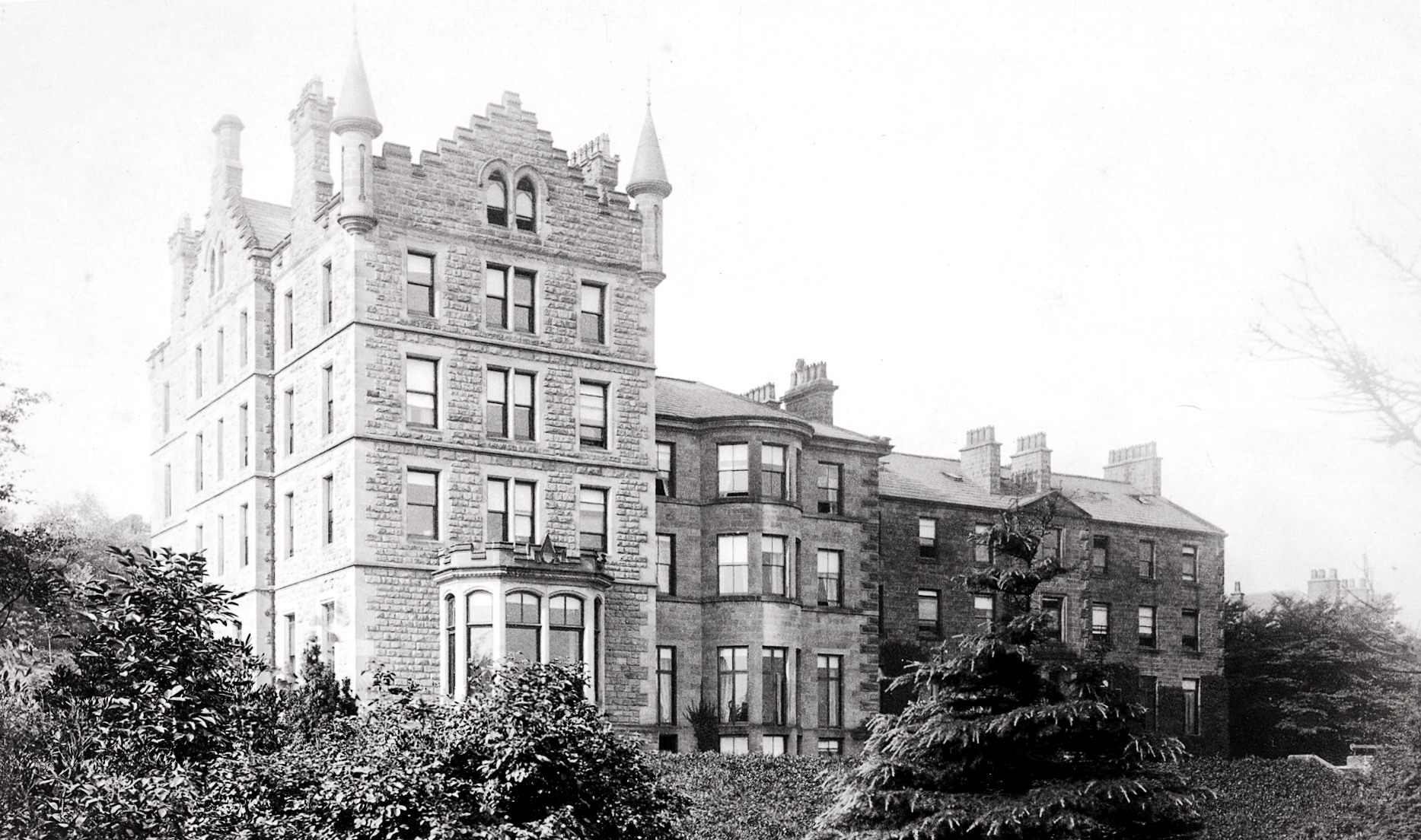 Craiglands before the later additions
7. Back on Cowpasture Road, turn right and then immediately right again and walk up the path to and through the gate at the top. Either walk up the steps to the rough path or right up sloping path which ends with some steps up to the Tarn. Built in 1874, financed by public subscription, and replacing Craig's Dam, it once had fountains and was much used by skaters in winter.
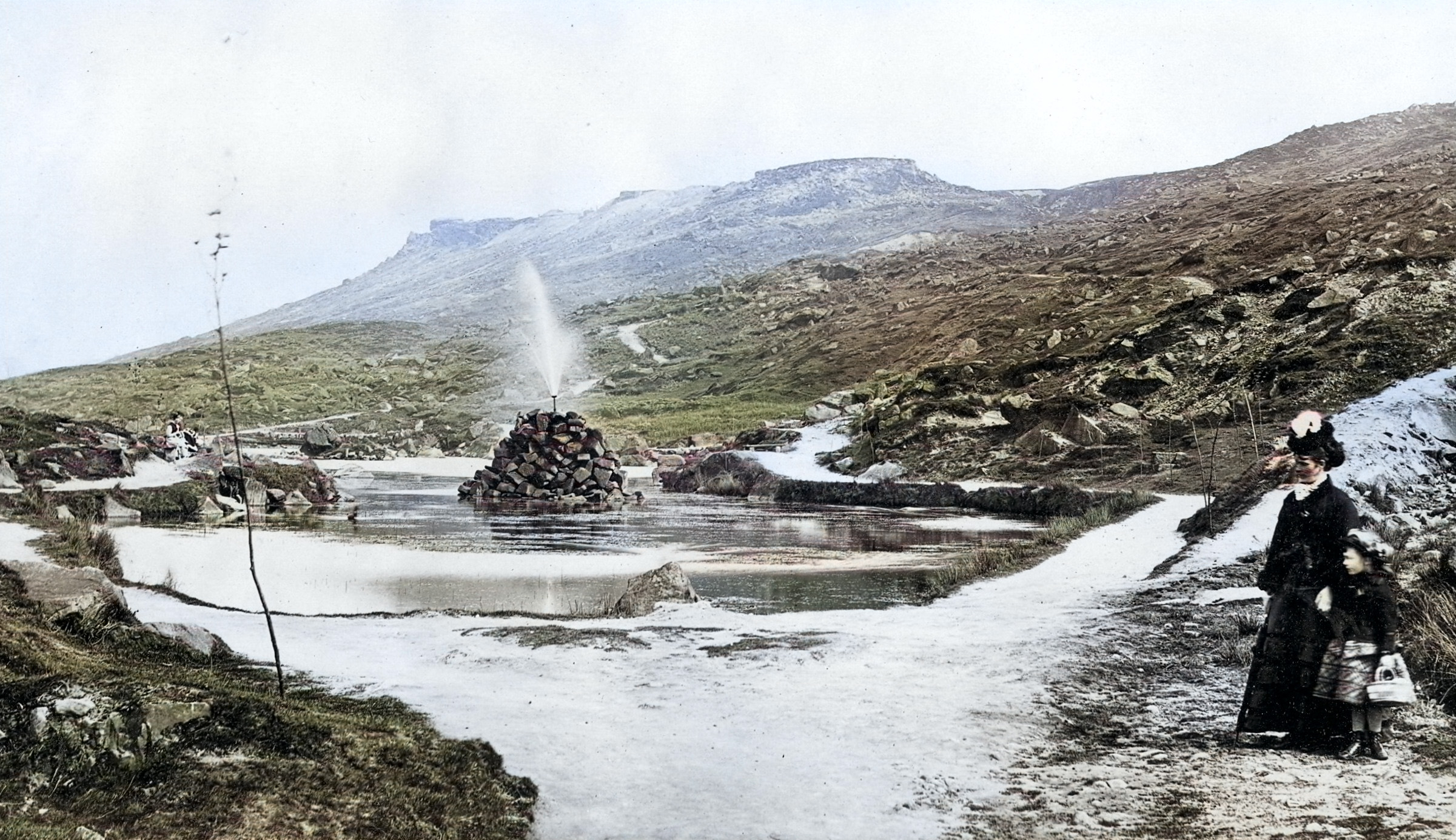 The fountain on the Tarn
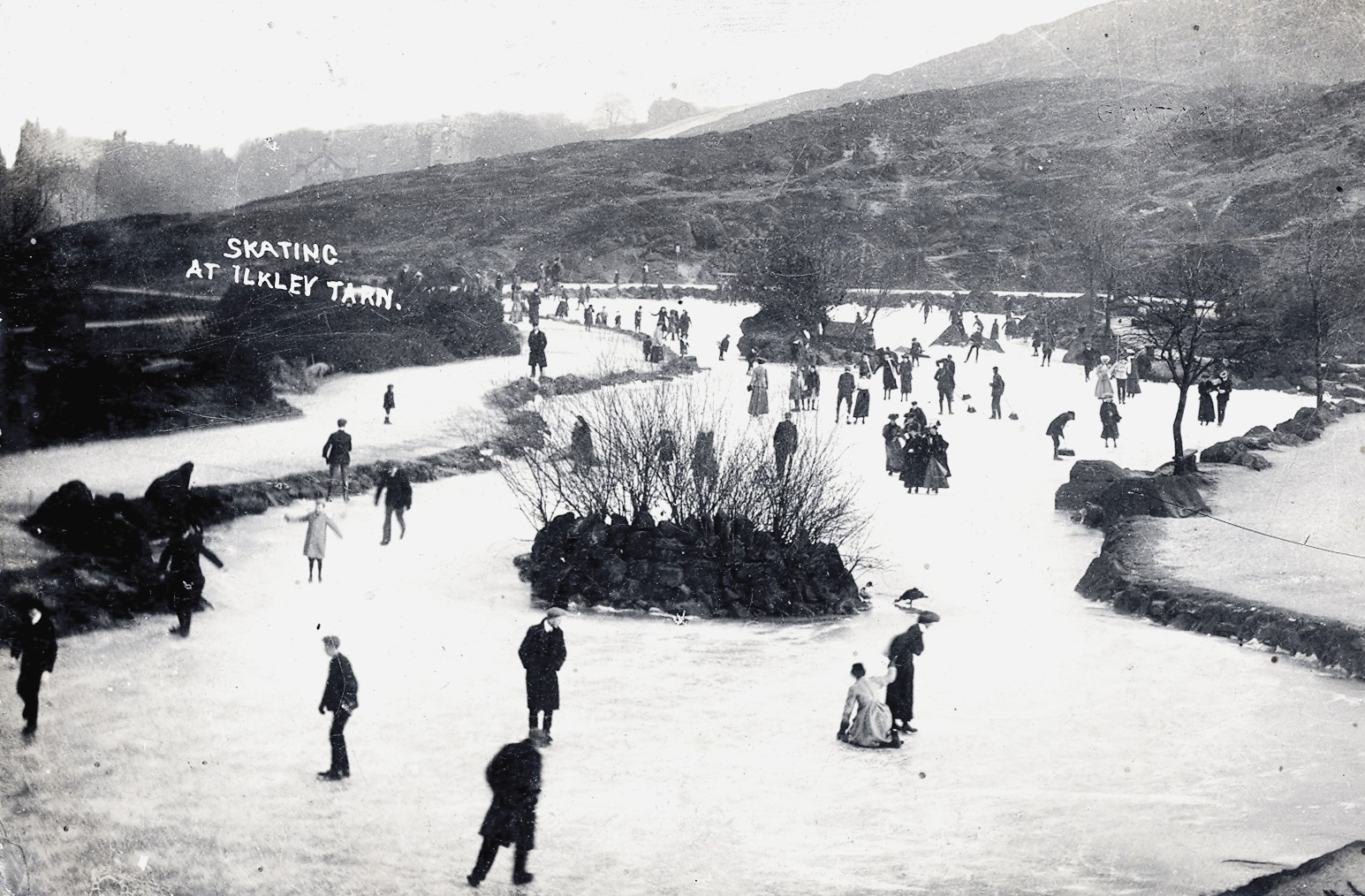 Skating on the tarn
8. The White Wells bathhouse is further up the moor. There are a number of paths that lead to White Wells. White Wells new baths were built in the 1790s by Squire Middelton. There is still a drinking fountain behind. Flags fly when the small café (cash only) and bath-house museum are open. The smaller 1829 Charity Bath-house is just beyond White Wells.
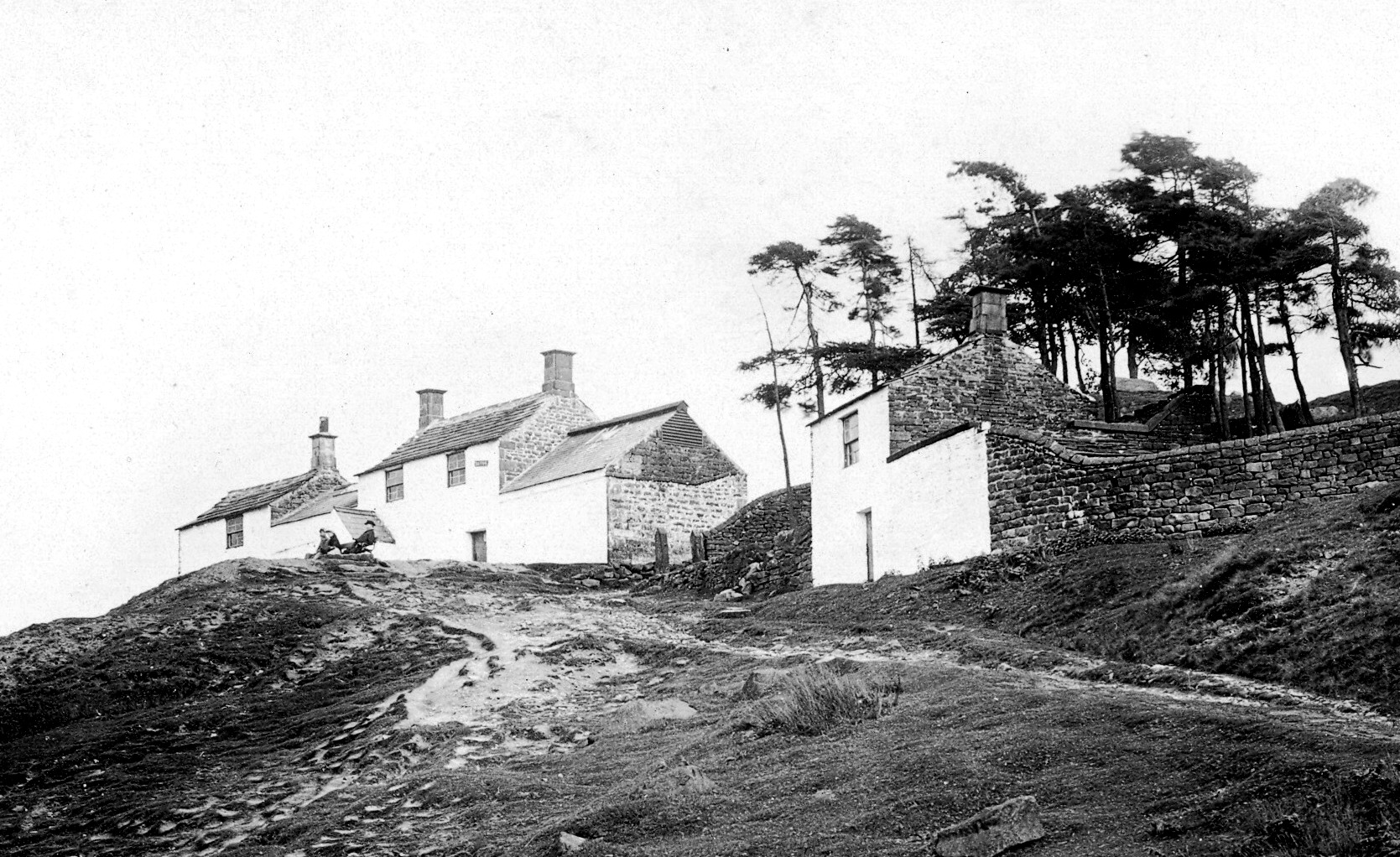 White Wells and Charity Baths
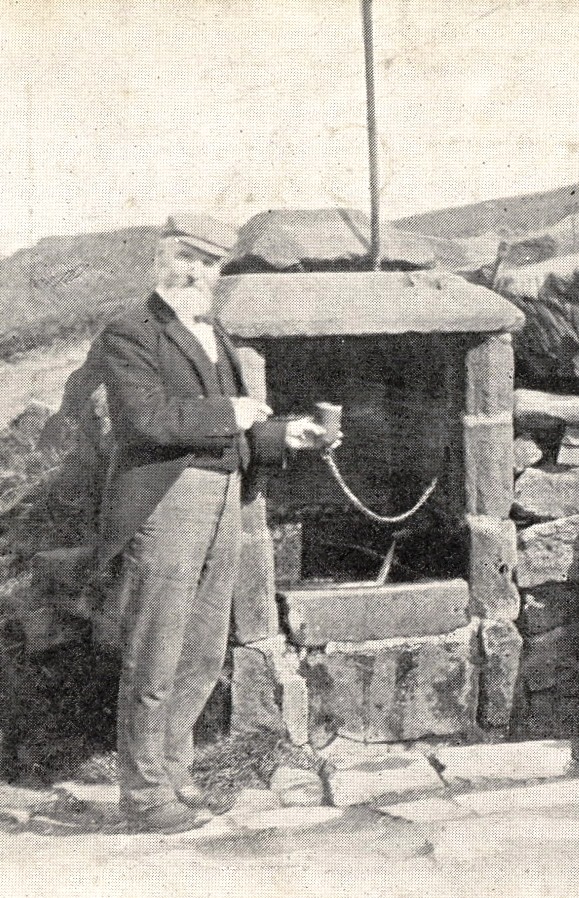 The drinking fountain behind White Wells
9. After enjoying the splendid views over the town and, to the left, up Wharfedale, walk down the gravel path which crosses a stream and then descends to Wells Road.
10. Turn right onto Wells Road to walk down to Broderick Drive on the left and to the large stone at the entrance to Wells House*. This former hydro is now apartments and the grounds are private. Since its erection in 1856 as a hydro it has also been a hotel, a wool control centre during the war, a hostel for foreign workers, a school for domestic education (the pud school) and finally high quality apartments.
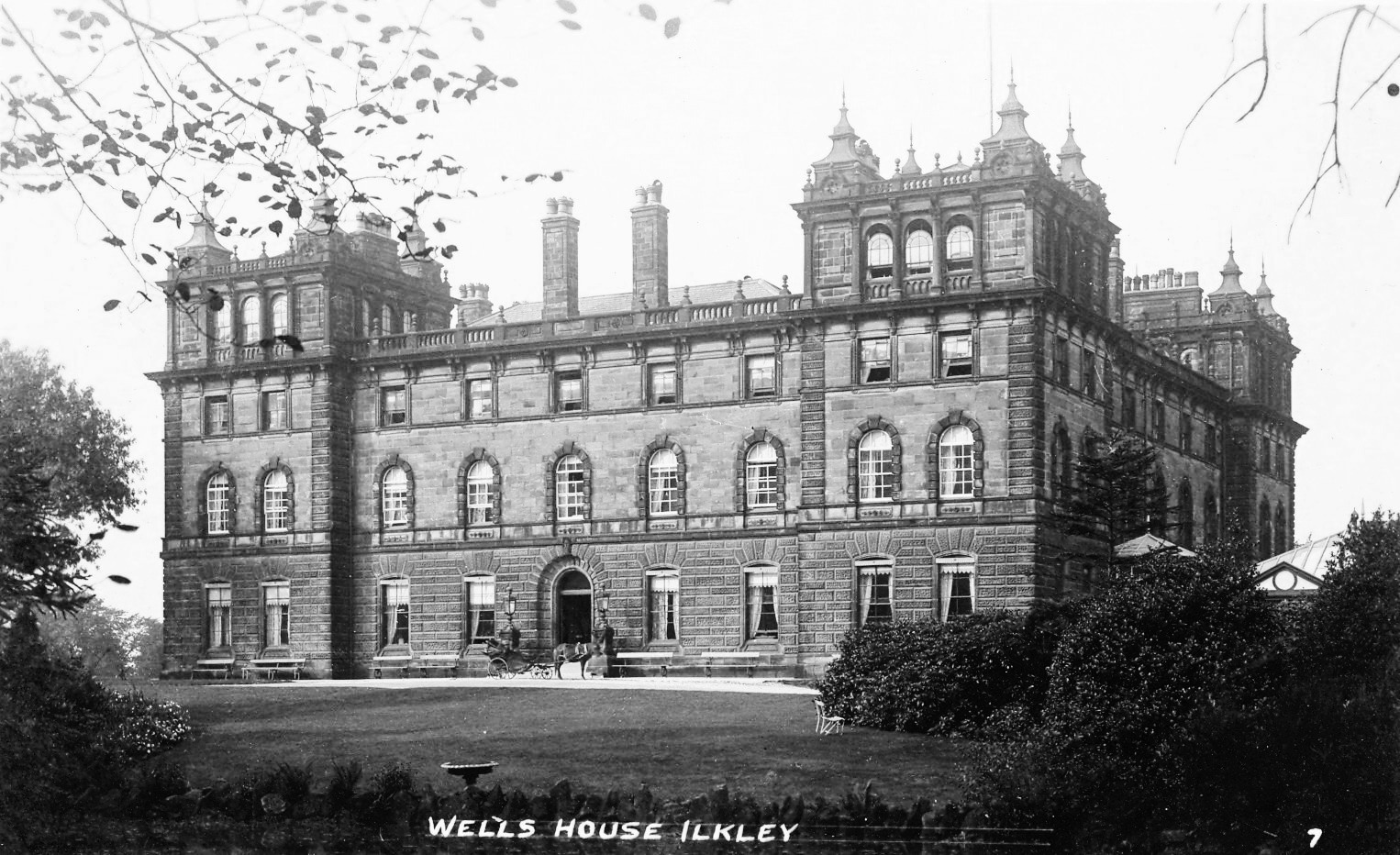
11. Continue to walk down to Darwin Gardens Millennium Green. Based on themes of evolution and regeneration, the area comprises wildlife-friendly landscaping, recreational features, community-based artwork, and links to Ilkley’s association with Charles Darwin. The car park is the site of West View Bandstand, constructed in 1904 but removed in 1950s.
12. Walk down Wells Road. Set back on the left is a pair of houses by the entrance to Wells House stables. Back on Wells Road, the hollow by the first of a pair of 1870's houses is a former mill pond. Cross Queens Road. The upper corn mill stood here.
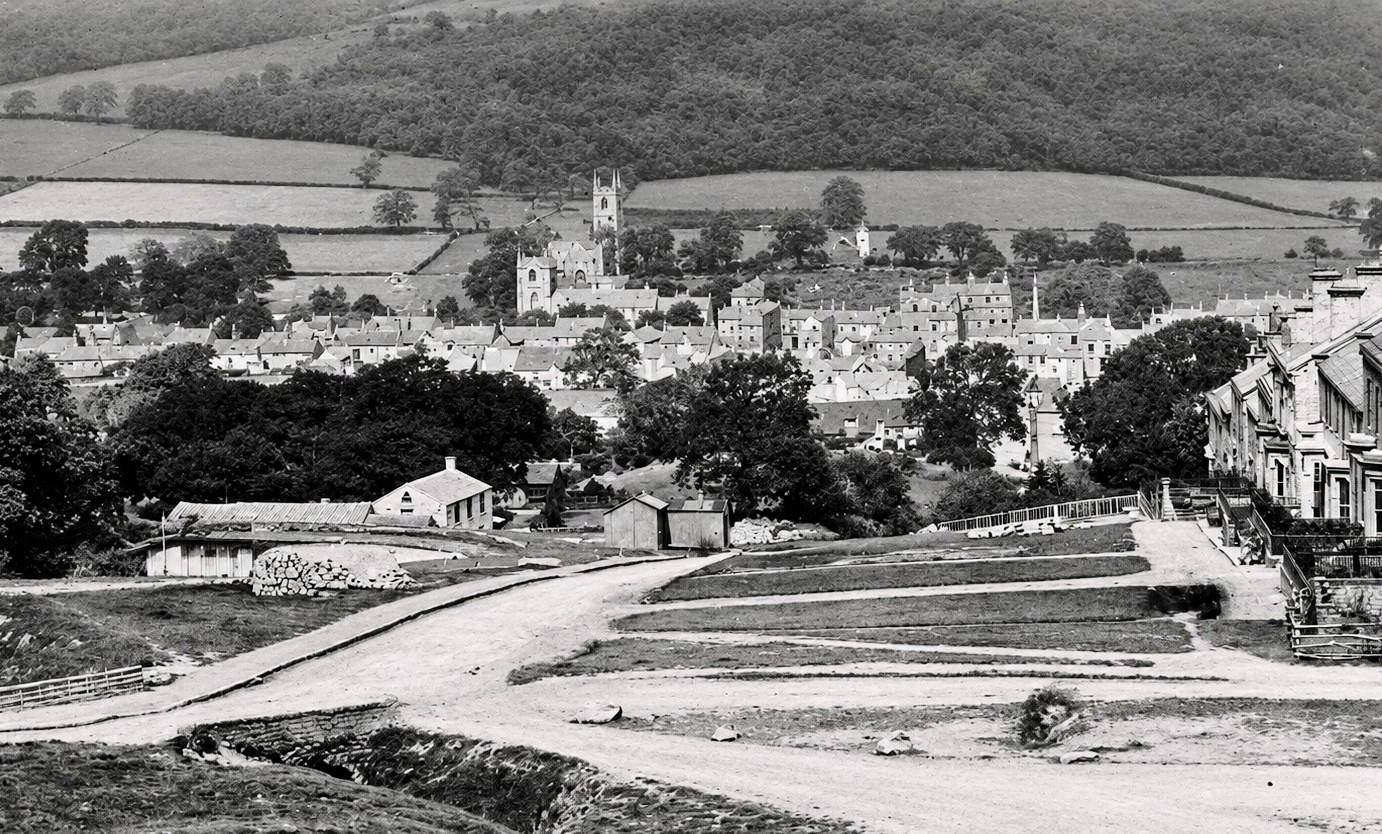 View down Wells Road with the upper corn mill
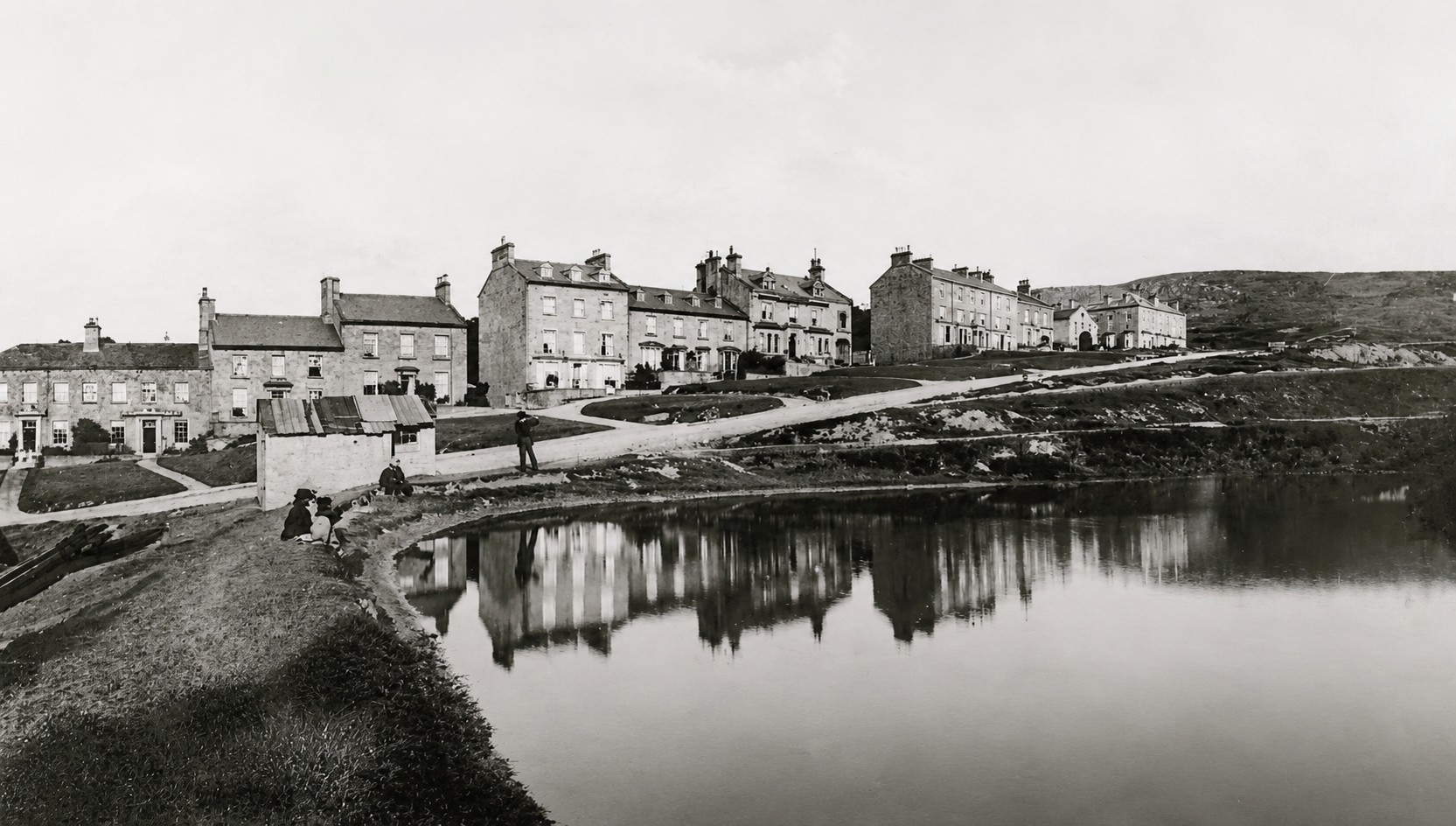 Mill pond on Wells Road now filled in
13. Enter Mill Ghyll and walk down the path. In the middle of this Ghyll was the lower corn mill which was demolished in 1873. The stone from the mill was used to edge the paths. William Middelton leased this narrow strip of land to the Local Board in 1873 at a rent of one shilling per annum.
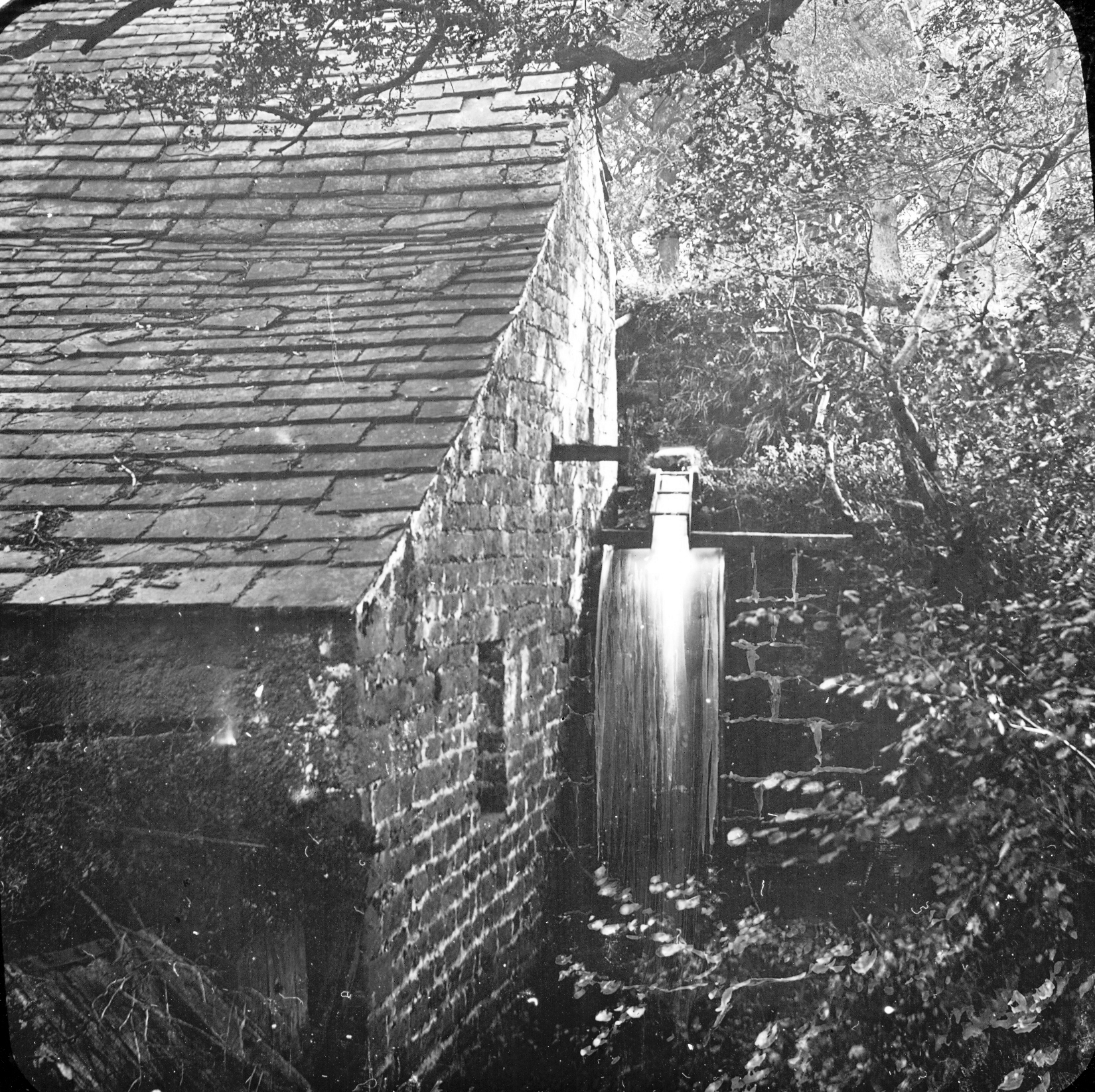 Lower Corn Mill
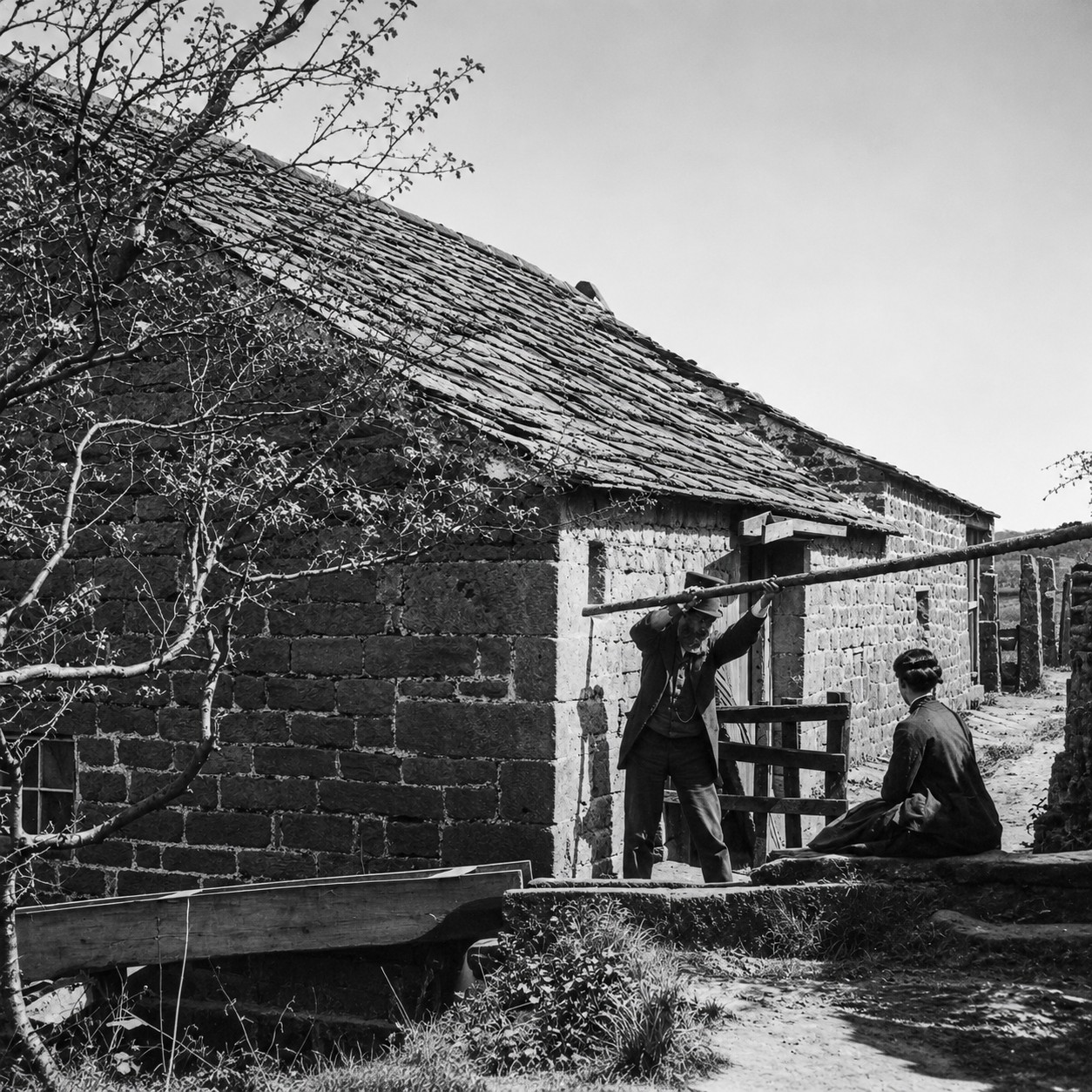 Lower corn Mill with tenants
14. At the bottom of the Ghyll, the brook goes into a culvert. Just before the main road is a large water fountain. This has replaced the original fountain built in 1875 by public subscription for £135. The new gravity-fed fountain’s design was created to reflect the sphagnum moss which is found in abundance on Ilkley Moor. It was opened in 2025 by Alan Titchmarsh.
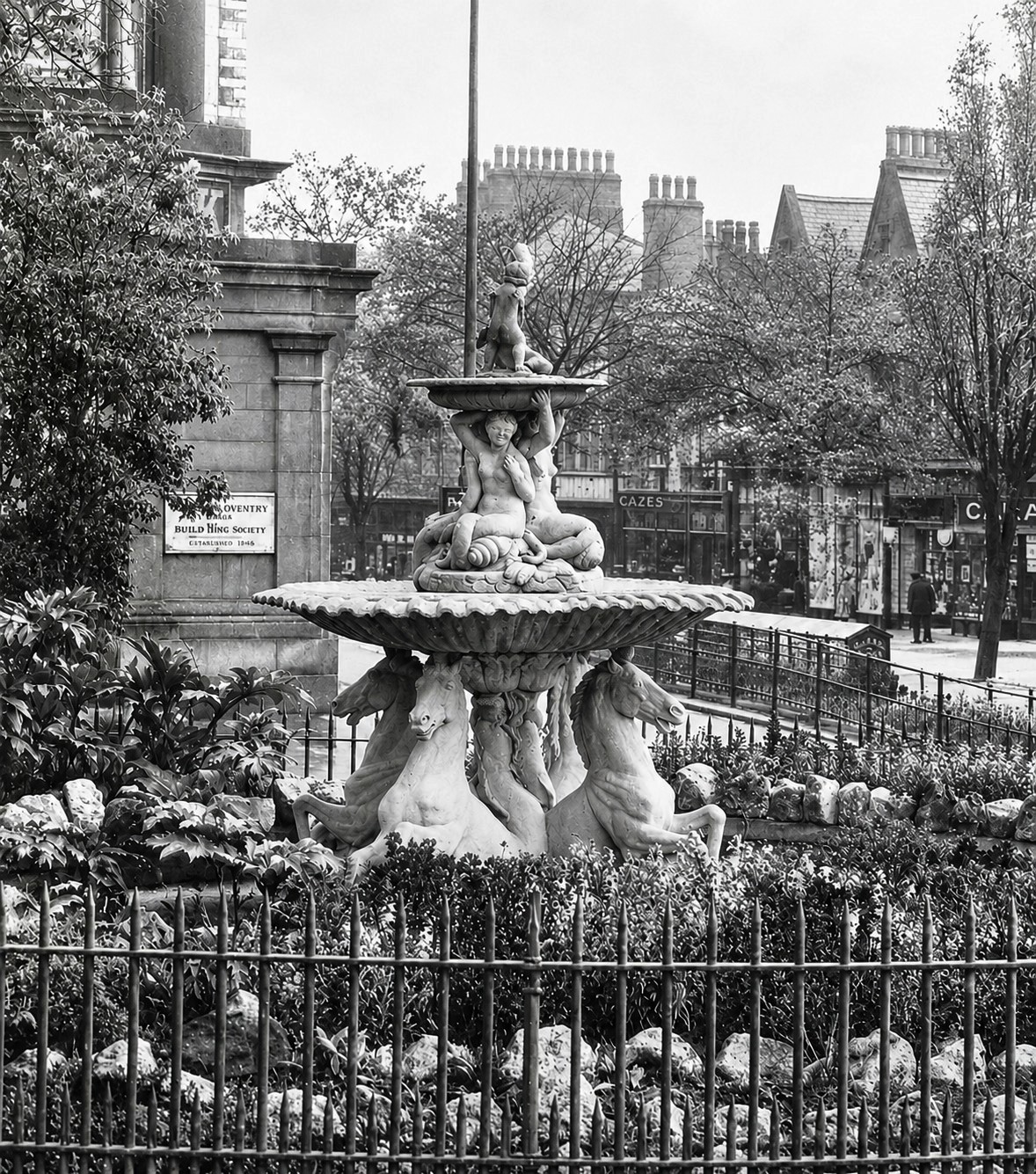 The Former Brook Street fountain